
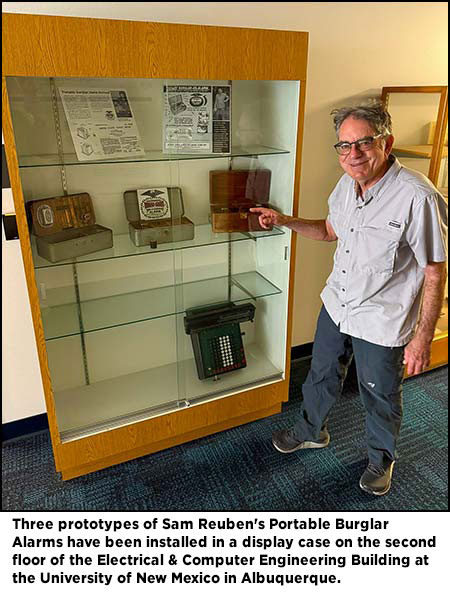
The Invention
by Linda Loo
 We grew up cash poor in the village of Glencoe, not more than a stone’s throw from Lake Michigan. My father, Samuel Reuben, invented a portable burglar alarm to protect us from fire and theft and to make us rich.
One night, the alarm set, my sister returned home from a date and tripped the cord: Bingo! One undesirable suitor snagged and released!
My brothers and sisters watched in wonderment as my father tinkered with his invention. We waited for the resultant fame and cash money to come rolling in.
Not surprisingly, my father abandoned the marketing of the alarm when our adorable brother Chucky was born. His lastborn child stole his heart and proved that not even a portable burglar alarm could keep it safe!
Chucky grew up to become a typesetter, writer, publisher, webmaster, and editor. To say that abandoning the portable burglar to raise Chucky paid off in aces would be an understatement.
As Reuben was fond of saying, always drink from the right side of the cup!
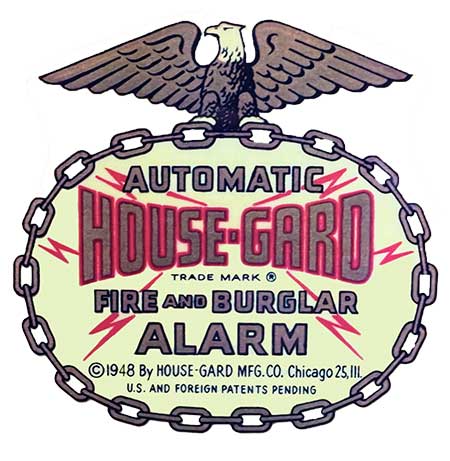
The House-Gard logo, designed in 1948, is a striking emblem of mid-century American ingenuity and protective spirit. It features a bold, shield-like design framed by a heavy chain border, symbolizing strength, security, and impenetrability — all key themes for a device intended to guard homes from fire and burglary.
At the top of the logo sits a majestic American bald eagle, wings spread wide in a posture of vigilance. The eagle, a classic symbol of freedom and national pride, reinforces the idea that this invention is not just practical, but patriotic — a safeguard for American households in a post-war era eager for innovation and peace of mind.
Centered within the chain border is the product name in large, stylized red lettering:
HOUSE-GARD
The name itself is flanked and energized by vivid red lightning bolts, conveying urgency, electrical innovation, and the alarm’s responsive power. Above it, the word "AUTOMATIC" assures consumers of the modern, self-activating nature of the device — a major technological leap in the 1940s.
Beneath the name, in bold blue block letters, is the phrase:
FIRE AND BURGLAR ALARM
This makes clear the product’s dual function: protection from both manmade and natural threats.
At the bottom of the logo, a fine-print line reads:
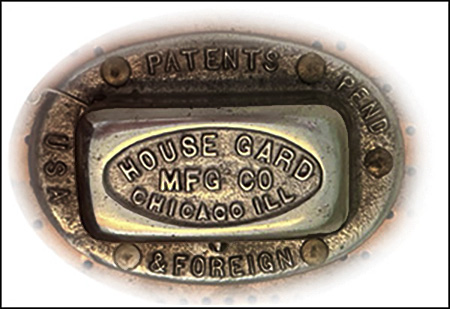
©1948 by HOUSE-GARD MFG. CO. Chicago 25, Ill.
U.S. and Foreign Patents Pending
This firmly places the invention within the timeline of post-WWII American manufacturing, when small-scale inventors and family-run businesses played a pivotal role in shaping home technology.
Summary: 1948 House-Gard Promotional Flyer
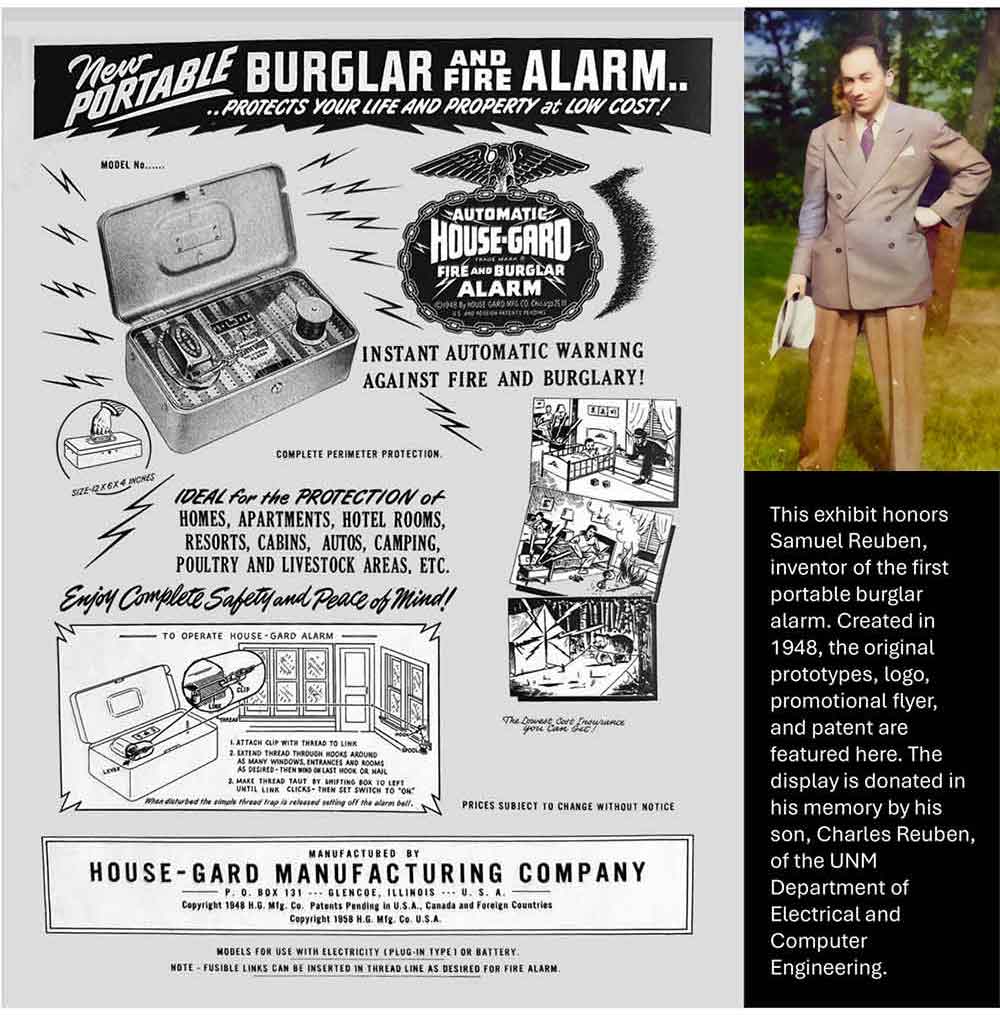 Manufactured by House-Gard Manufacturing Company – Glencoe, Illinois, USA
This vintage flyer introduces the new Portable Burglar and Fire Alarm, proudly marketed with the promise:
“Protects your life and property at low cost!”
At the heart of the flyer is the House-Gard Automatic Fire and Burglar Alarm, housed in a compact, durable case (6½" x 8½" x 4"). The product is described as offering instant, automatic warning against fire and burglary — providing complete perimeter protection wherever it's placed.
Key Features Highlighted:
- Portable and Self-Contained: Small enough to take anywhere — powered by electricity or battery.
- Versatile Use: Ideal for protecting not just homes, but also:
- Apartments
- Hotel rooms
- Resorts and cabins
- Automobiles
- Camping sites
- Poultry and livestock areas
- Peace of Mind: The flyer emphasizes "complete safety and peace of mind" for families and property owners alike
- Intellectual Property: U.S. and Foreign Patents Pending
- Models for both plug-in and battery operation
- Manufactured and marketed by House-Gard Manufacturing Company, founded and operated by Samuel Reuben.
How It Works:
- A simple thread clip system triggers the alarm when an intruder crosses the perimeter.
- The alarm emits a loud signal, deterring the threat instantly.
- It can be adapted for use as a fire alarm with a heat-sensitive fuse link.
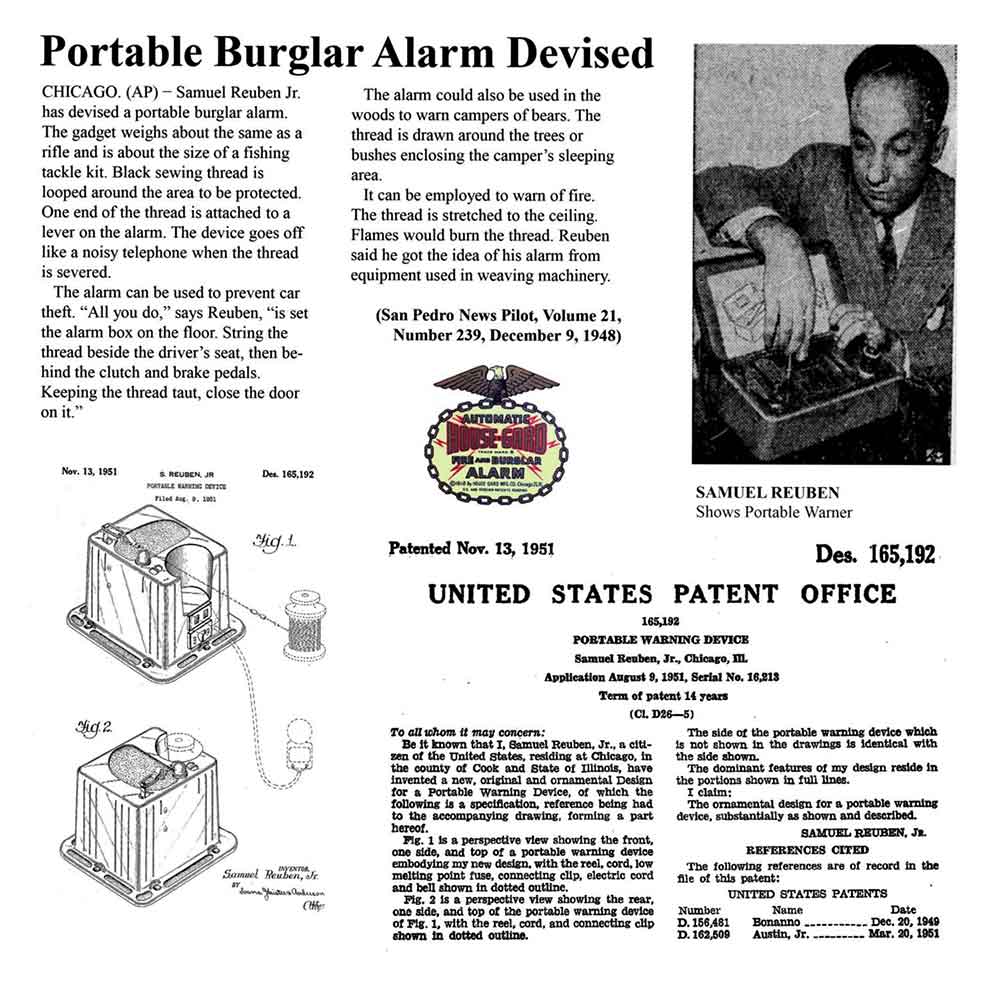 This page includes the copy and original photo of an article that had been circulating in papers throughout the United States after my Dad patented his "invention." Also included on this page is a technical drawing of his original burglar alarm as well as the patent, which was registered through the US Patent Office in 1951.
Thank you for visiting Chucksville. Please sign my guestbook!


|
|